A year ago today, I visited a cemetery in Sucre, Bolvia. The time I spent there will remain some of the most profound moments of my life.
But before we get to that, let’s rewind to 6 am that morning, when I arrived at the doorstep of a hostel I had found on the final hour of my very bumpy, very scary bus ride. The bus got me to my destination in one piece and I caught a cab over to a hostel that appeared to have empty beds that night.
It took about 10 minutes of waiting slouching outside the hostel for someone to come by, and when I was welcomed in, I learned that I was one of five to show up at the ungodly hour of morning. Two of these travelers – British girls who had spent the last six months volunteering in Chile – became my first traveler friends. We freshened up and when the sun rose, walked through the steep and narrow streets to a popular breakfast spot. Sucre, as the internet had promised me, was a proper ‘backpacker town’. There were people from so many countries, and most of them had come for the same reason – to learn Spanish. Adverts of classes for different levels were everywhere, and had I had a little more time, I would have signed up for one in a heartbeat. But I had a route sketched out based on some research I’d done two nights prior, and it had me in Sucre for 2 days and no more.
My next stop was the tourist office to pick up a map of the town. The lady behind the desk excitedly gave me one, and then began to tell me about a hike that the city was organizing in celebration of the winter Solstice. I dismissed it almost instantly because I had a plan I wanted to stick to. But I left with the flyer, and in the spirit of being less uptight, I went right back and signed up! It was one of the best semi-impulsive decisions I’ve ever made (second perhaps to buying a backpack and a ticket to Bolivia).
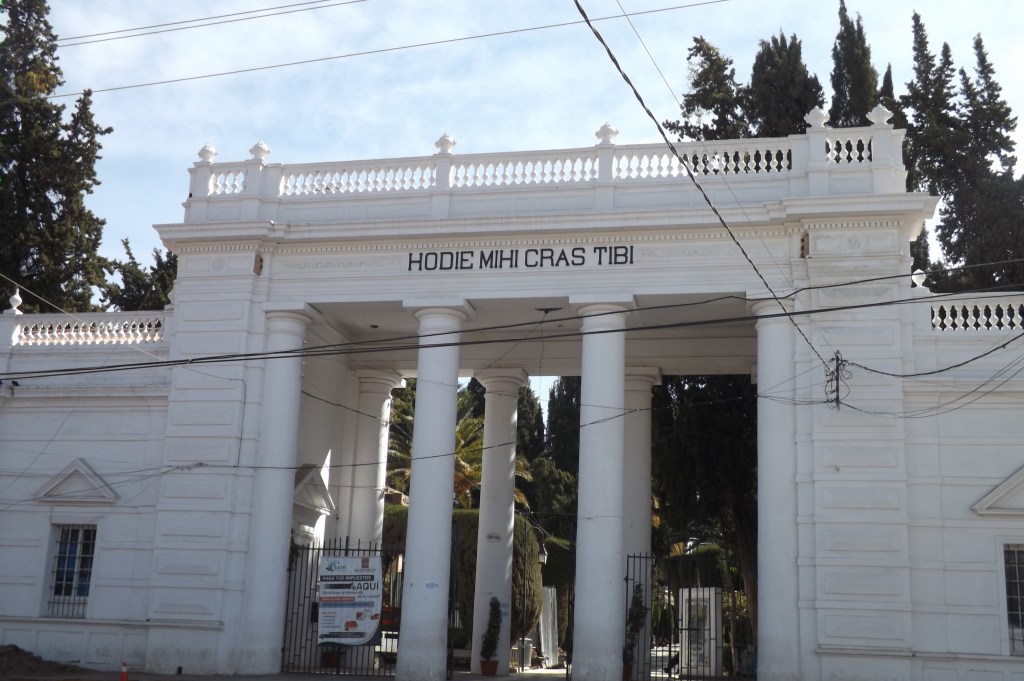
Then, using my map, I wandered through the town, taking moments to marvel at all the different landmarks (almost all churches), and finally, I reached the cemetery in Sucre. In big bold letters on the entrance arch were the following words: hodie mihi, cras tibi. Latin for ‘today it is me, tomorrow it will be you’.
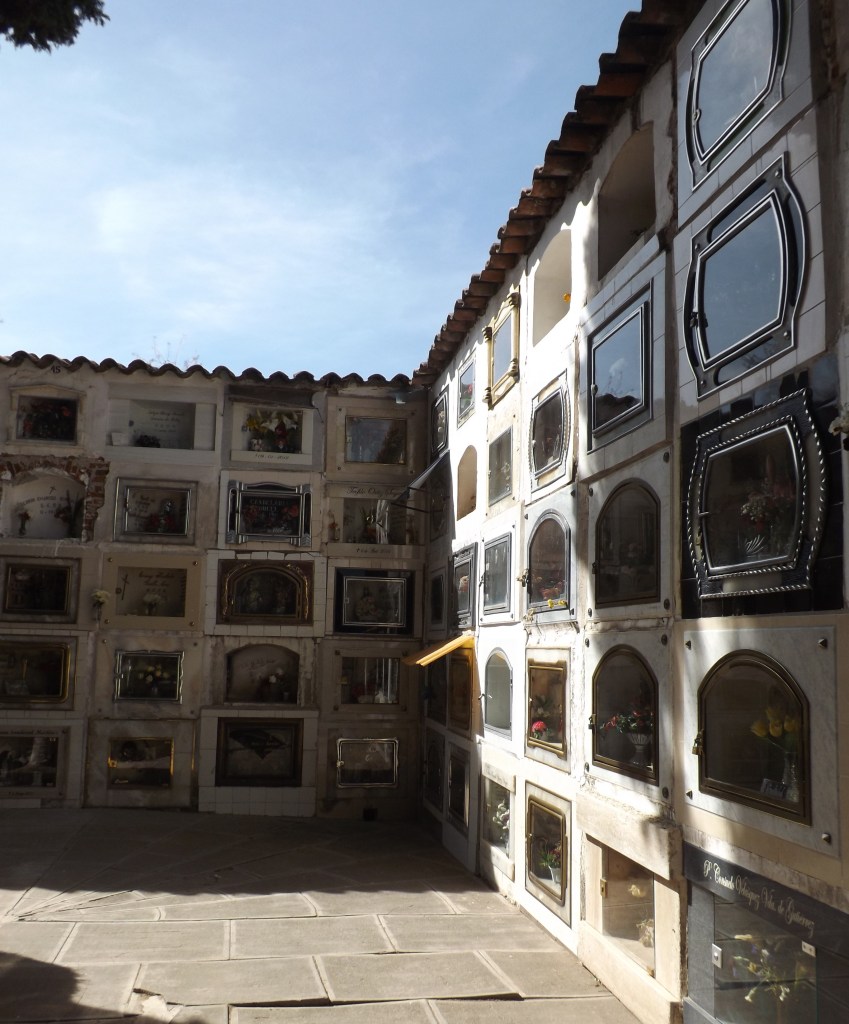
I walked into rows and rows of stacked graves, each with photos of the deceased placed alongside candles, flowers and objects – like miniatures dolls and bottles of alcohol – that represented them. Halfway through the grounds, I received a panicked call from my partner, telling me to text my mom that I was okay. Turns our news of a bus crash in Bolivia had reached Canada.
I sat down on the nearest bench, surrounded by departed souls, knowing that in an alternative universe, I might be with them at that moment. The thought was equally unsettling and peaceful. I proceeded with my day – a surreal view of the entire city from a church rooftop, a history lesson of the country’s independence where the Declaration was signed, and a mission to find a tailor to repair by daypack strap, which had given away hours before.My last stop was a church, and in it, I knelt and processed the whirlwind of a day I’d had.
I ended the day eating Salchipapa (fries and sausages) with strangers from countries that I’d never even heard of before.

